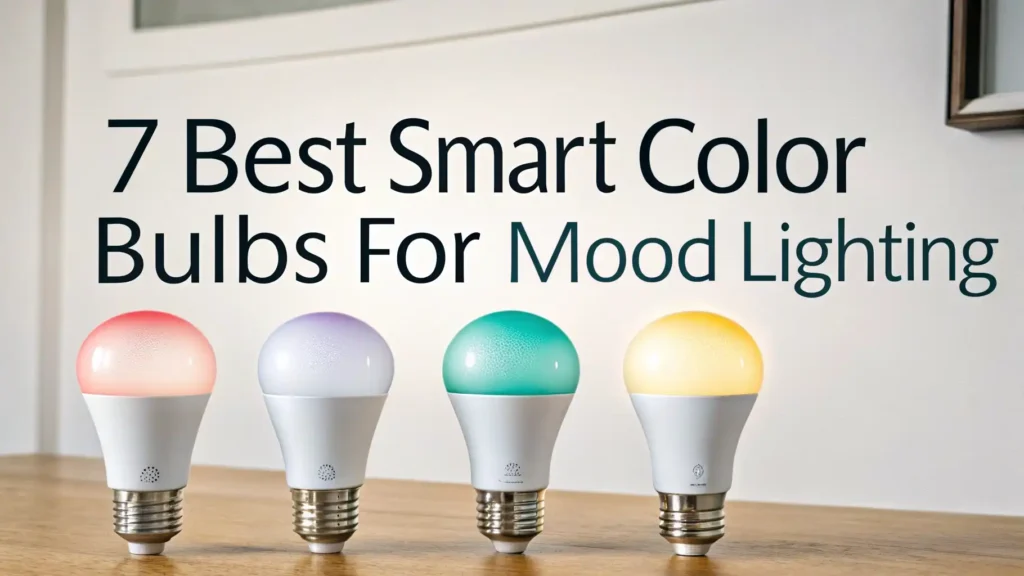
7 Best Smart Color Bulbs for Mood Lighting
Smart color bulbs have become essential accessories for modern homes. These intelligent lighting solutions offer endless possibilities to create perfect mood lighting for any occasion.
Whether you want to relax after a long day or energize your morning routine, the right smart color bulb can transform your living space instantly.
Modern smart bulbs provide millions of color options and customizable features that traditional bulbs simply cannot match. You can control them remotely through smartphone apps or voice commands.
Key Takeaways
- Smart Color Technology: Modern smart bulbs display up to 16 million colors with precise brightness control from 1% to 100%. They use LED technology which lasts longer and consumes significantly less energy than traditional incandescent bulbs.
- Multiple Control Options: You can control smart color bulbs through smartphone apps, voice assistants like Alexa and Google Assistant, or physical switches. Many models support scheduling and automation features for hands-free operation.
- Mood Enhancement Features: Smart bulbs offer preset scenes and dynamic effects like sunset, ocean, and jungle themes. They can sync with music, create circadian rhythm lighting, and provide customizable ambiance for different activities.
- Compatibility Considerations: Check compatibility with your existing smart home platform before purchasing. Look for Matter support for future-proofing and broader device integration across different ecosystems.
- Energy Efficiency Benefits: Smart color bulbs typically consume 75-85% less energy than traditional bulbs while providing superior brightness control. Many models include energy monitoring features to track usage and optimize consumption.
Philips Hue Color A19 Smart LED Bulb


The Philips Hue Color A19 stands as the gold standard for smart color lighting. This premium bulb delivers exceptional color accuracy with 16 million colors and warm to cool white temperatures. The Hue ecosystem offers unmatched compatibility with virtually every smart home platform including Apple HomeKit, Amazon Alexa, Google Assistant, and Samsung SmartThings.
Setup requires the Philips Hue Bridge hub for full functionality, but this enables advanced features like geofencing and extensive automation options. The bulb produces 1,600 lumens at maximum brightness, making it suitable for primary room lighting. Color reproduction is stunning with deep reds, vibrant blues, and accurate skin tones.
The Philips Hue app provides comprehensive control with preset scenes, dynamic effects, and music synchronization. You can create custom lighting recipes and share them with the global Hue community. The bulb supports dimming down to 1% without flickering, perfect for nighttime mood lighting.
Pros:
- Exceptional color accuracy and brightness
- Extensive smart home compatibility
- Premium build quality and reliability
- Advanced features like geofencing
- Large ecosystem of compatible accessories
Cons:
- Requires expensive Hue Bridge hub
- Higher price point than competitors
- Complex setup for beginners
- Some features need subscription service
WiZ 60W A19 Color LED Smart Bulb

The WiZ 60W A19 offers excellent value in the smart lighting market. This bulb provides impressive performance at a fraction of Hue’s cost while maintaining quality and features. WiZ is owned by Signify (Philips’ parent company), ensuring reliable engineering and ongoing support.
Color reproduction is solid with good saturation across the spectrum. The bulb reaches 800 lumens maximum brightness, sufficient for most residential applications. The WiZ app includes 19 preset dynamic effects and multiple scene options for different activities and moods.
One standout feature is the built-in circadian rhythm mode that automatically adjusts color temperature throughout the day. This helps maintain natural sleep-wake cycles by providing cool white light in the morning and warm tones in the evening. The bulb connects directly to WiFi without requiring a separate hub.
Voice control works smoothly with Alexa, Google Assistant, and Siri Shortcuts. Matter support provides future-proofing for smart home integration. The scheduling and automation features are robust for the price point.
Pros:
- Excellent value for money
- No hub required for basic features
- Built-in circadian rhythm support
- Good app with multiple scenes
- Matter compatibility
Cons:
- Lower maximum brightness than premium options
- WiFi setup can be finicky initially
- Limited advanced features compared to Hue
- No HomeKit support
TP-Link Kasa Smart Wi-Fi LED Bulb KL125

TP-Link’s Kasa KL125 delivers reliable smart lighting performance with straightforward operation. This bulb focuses on simplicity and dependability rather than advanced features. The color range covers most common lighting needs with decent saturation and brightness control.
The Kasa Smart app is intuitive and responsive with minimal learning curve. Preset scenes include common scenarios like Reading, Relax, and Party modes. You can create custom scenes and save them for quick access. The scheduling feature works reliably for automated lighting routines.
Voice control integration with Alexa and Google Assistant is seamless. The bulb responds quickly to commands and maintains stable connections. While it lacks some premium features, the KL125 excels at core smart bulb functions without complications.
Energy monitoring provides insights into power consumption and usage patterns. This helps optimize lighting schedules for maximum efficiency. The bulb’s 800-lumen output works well for medium-sized rooms and accent lighting applications.
Pros:
- Simple, reliable operation
- User-friendly mobile app
- Energy monitoring features
- Stable WiFi connectivity
- Affordable pricing
Cons:
- Limited color effects and scenes
- No hub connectivity option
- Basic automation features
- Lower brightness than premium models
Lifx Mini Color Smart Bulb

Lifx Mini Color offers compact smart lighting with impressive capabilities. Despite its smaller size, this bulb produces 800 lumens of bright, colorful light. The color accuracy is excellent with vivid saturation and smooth transitions between hues.
The Lifx app provides extensive customization options including color picker tools and effect creation. You can paint colors across multiple bulbs to create immersive lighting displays. The music visualization feature syncs lighting with audio input for dynamic party atmospheres.
No hub is required as the bulb connects directly to WiFi. This simplifies installation and reduces system complexity. The bulb works with Apple HomeKit natively, making it attractive for iOS users who want seamless Siri integration.
Build quality is solid with good heat dissipation and reliable electronics. The bulb maintains stable performance over extended use periods. Firmware updates arrive regularly with new features and improvements.
Pros:
- Native HomeKit support
- Excellent color quality
- Music synchronization features
- No hub required
- Compact form factor
Cons:
- Higher price than comparable options
- App can be overwhelming for beginners
- Limited third-party integration
- Occasional connectivity issues
Govee Immersion Color Smart Bulb

Govee’s Immersion bulb targets budget-conscious users without sacrificing essential features. This affordable option provides good color reproduction and basic smart functionality. The bulb produces 800 lumens maximum brightness suitable for accent and mood lighting.
The Govee Home app includes multiple preset scenes and DIY modes for custom lighting creation. Music sync functionality responds to ambient sound or smartphone audio. The color transitions are smooth with minimal delay during scene changes.
Setup is straightforward with WiFi connection and voice assistant integration. The bulb works with Alexa and Google Assistant for hands-free control. While lacking advanced features, it covers core smart lighting needs effectively.
Multiple bulbs can be grouped for synchronized lighting effects. This creates cohesive ambiance across larger spaces without complex configuration. The timer and scheduling functions work reliably for automated operation.
Pros:
- Very affordable pricing
- Easy setup and operation
- Music synchronization
- Group control capabilities
- Basic automation features
Cons:
- Limited advanced features
- Basic build quality
- Restricted smart home integration
- Lower color accuracy than premium options
Sengled Color Plus Smart Bulb

Sengled Color Plus provides solid mid-range performance with balanced features and pricing. The bulb offers good color reproduction across the spectrum with 800 lumens maximum brightness. Color transitions are smooth and responsive to app commands.
The Sengled Home app includes essential smart lighting features without overwhelming complexity. Preset scenes cover common use cases like relaxation, reading, and entertainment. Custom scene creation allows personalized lighting preferences.
Voice control works reliably with major smart assistants. The bulb maintains stable WiFi connections and responds quickly to remote commands. Group controls enable synchronized lighting across multiple bulbs for room-wide effects.
Energy efficiency is good with LED technology providing long lifespan and low power consumption. The bulb runs cool during operation with adequate heat dissipation. Build quality feels solid for the price point.
Pros:
- Balanced price and performance
- Stable connectivity
- Good color reproduction
- Energy efficient operation
- Reliable voice control
Cons:
- Limited unique features
- Basic app interface
- No hub connectivity
- Average maximum brightness
GE Cync Smart Color Bulb

GE’s Cync smart bulb offers established brand reliability with modern smart features. The color performance is good with adequate saturation and brightness control. Maximum output reaches 800 lumens suitable for most residential applications.
The Cync app provides straightforward control with preset scenes and custom options. Voice integration with Alexa and Google Assistant works smoothly. The bulb can operate in hub-free mode or connect to Cync’s smart home ecosystem for expanded functionality.
Setup is user-friendly with clear instructions and reliable WiFi pairing. The bulb maintains stable connections and responds promptly to commands. Scheduling and automation features work consistently for routine lighting control.
The design is traditional with standard A19 form factor fitting most fixtures. Heat management is adequate with reasonable operating temperatures. Overall build quality reflects GE’s manufacturing experience and quality standards.
Pros:
- Trusted brand reputation
- Reliable performance
- User-friendly setup
- Stable connectivity
- Good build quality
Cons:
- Limited advanced features
- Average color performance
- Basic app functionality
- Higher price than some competitors
What Makes Smart Color Bulbs Perfect for Mood Lighting
Smart color bulbs excel at mood lighting because they offer precise control over color temperature and brightness. Traditional bulbs provide fixed lighting that cannot adapt to different situations or times of day. Smart bulbs eliminate this limitation by offering millions of color combinations and dimming options.
Color psychology plays a significant role in mood enhancement. Warm colors like red and orange create cozy, intimate atmospheres perfect for relaxation. Cool colors like blue and purple promote calmness and focus. Green tones can reduce eye strain and create natural, peaceful environments.
The ability to dim lights to very low levels enables subtle ambient lighting without harsh glare. Many smart bulbs can dim to 1% brightness, creating gentle mood lighting suitable for movie nights or romantic dinners. This level of control is impossible with traditional dimmer switches.
Preset scenes simplify mood creation by combining specific colors and brightness levels for different activities. Reading scenes provide bright, cool white light that reduces eye strain. Party scenes cycle through vibrant colors with dynamic effects that energize social gatherings.
Key Features to Consider When Choosing Smart Color Bulbs
Brightness Output determines how well the bulb illuminates your space. Measured in lumens, most smart color bulbs range from 800 to 1,600 lumens. Higher output bulbs work better for primary room lighting, while lower output models suit accent and mood lighting applications.
Color Accuracy affects how realistic and vibrant colors appear. Premium bulbs reproduce colors more accurately with better saturation and consistency. Cheaper models may have limited color ranges or poor color mixing that creates muddy intermediate tones.
Connectivity Options determine compatibility with your existing smart home setup. WiFi-only bulbs are simple to install but may strain your network with multiple devices. Hub-based systems provide more reliable connections and advanced features but require additional hardware investment.
Smart Home Integration varies significantly between brands and models. Check compatibility with your preferred voice assistant and smart home platform. Matter support provides future-proofing by enabling cross-platform compatibility as the standard evolves.
App Quality directly impacts your daily experience with smart bulbs. Well-designed apps provide intuitive controls, reliable performance, and useful features. Poor apps can make even good hardware frustrating to use and limit functionality.
Installation and Setup Guide for Smart Color Bulbs
Installing smart color bulbs is typically straightforward, but proper setup ensures optimal performance. Start by turning off power at the wall switch before removing old bulbs. Install the smart bulb in the same socket, ensuring secure connection and proper seating.
Download the manufacturer’s app before powering on the bulb. Most apps require account creation and WiFi network access. Have your WiFi password ready as you’ll need to connect the bulb to your home network during initial setup.
Follow the app’s pairing instructions carefully. Most bulbs enter pairing mode automatically when first powered on. If pairing fails, try turning the bulb off and on several times or holding the physical switch for specific timing sequences as directed by the app.
Network placement affects connectivity and performance. Smart bulbs work best within good WiFi range of your router. Thick walls, metal objects, and interference from other devices can cause connection issues. Consider WiFi extenders if you experience connectivity problems.
Test all features after successful pairing. Verify color changing, dimming, voice control, and any special effects work properly. Create a simple scene or schedule to ensure automation features function correctly. Contact customer support if you encounter persistent issues.
Comparing Smart Color Bulbs vs Traditional Lighting
Smart color bulbs offer significant advantages over traditional incandescent and even standard LED bulbs. The primary benefit is complete control over color, brightness, and timing without physical switches or dimmer installations. This flexibility enables lighting customization that matches any mood or activity.
Energy efficiency is another major advantage. Smart LED bulbs consume 75-85% less energy than incandescent bulbs while providing equivalent or better brightness. The longer lifespan of LED technology means fewer replacement bulbs and reduced maintenance costs over time.
Remote control capability adds convenience that traditional lighting cannot match. You can adjust lighting from anywhere in your home or even while away. This feature enhances security by enabling lighting control while traveling and provides convenience for bedtime or early morning adjustments.
Traditional lighting still has some advantages including lower upfront costs and complete reliability regardless of network connectivity. Power outages don’t affect basic functionality, and there are no app dependencies or software updates to manage.
The initial investment in smart bulbs is higher, but long-term savings from energy efficiency and longevity often offset the price difference. For mood lighting applications, smart color bulbs provide capabilities that traditional lighting simply cannot replicate.
Creating Perfect Ambiance with Smart Color Bulb Scenes
Scene creation is where smart color bulbs truly shine for mood lighting applications. Preset scenes offer quick access to optimized lighting for specific activities. Reading scenes provide bright, cool white light that reduces eye strain and improves focus. Relaxation scenes use warm, dim lighting that promotes calmness and rest.
Custom scenes allow personalized lighting that matches your exact preferences. Experiment with different color combinations and brightness levels to find settings that enhance your mood and activities. Save successful combinations for quick access later.
Dynamic effects add visual interest through color cycling and pattern changes. Sunset effects gradually transition from bright daylight to warm evening tones. Ocean effects cycle through blue and teal colors with gentle wave-like patterns. These effects work well for meditation, relaxation, or background ambiance.
Music synchronization creates immersive experiences by matching lighting to audio input. Party scenes become more engaging when lights pulse and change colors in rhythm with music. This feature transforms any room into an entertaining space for social gatherings.
Circadian lighting supports natural sleep-wake cycles by automatically adjusting color temperature throughout the day. Cool white light in the morning helps promote alertness, while warm tones in the evening prepare your body for rest.
Energy Efficiency and Cost Savings Benefits
Smart color bulbs provide substantial energy savings compared to traditional incandescent lighting. LED technology consumes approximately 9-12 watts to produce light equivalent to 60-watt incandescent bulbs. This 80% reduction in power consumption significantly lowers electricity bills.
Dimming capabilities further enhance energy efficiency by reducing power consumption when full brightness isn’t needed. A bulb dimmed to 50% brightness uses approximately 40% less energy while still providing adequate illumination for many activities.
Scheduling features eliminate wasted energy from lights left on unnecessarily. Automated schedules ensure lights turn off when rooms are unoccupied and turn on only when needed. This hands-free efficiency optimization can reduce lighting energy consumption by 20-30%.
The longer lifespan of LED smart bulbs reduces replacement costs over time. Quality smart bulbs typically last 15,000-25,000 hours compared to 1,000 hours for incandescent bulbs. This longevity means fewer purchases and less maintenance effort.
Energy monitoring features in some smart bulbs provide detailed consumption data. This information helps identify usage patterns and optimization opportunities. Understanding actual energy costs enables more informed decisions about lighting schedules and brightness settings.
Voice Control and Smart Home Integration Options
Voice control transforms smart color bulbs into hands-free lighting solutions. Amazon Alexa provides comprehensive control including on/off, dimming, color changes, and scene activation. Commands like “Alexa, set living room lights to blue” or “Alexa, dim bedroom lights to 25%” work reliably with compatible bulbs.
Google Assistant offers similar functionality with natural language processing that understands various command formats. You can say “Hey Google, make the lights romantic” or “Hey Google, turn on reading mode” to activate specific scenes and color combinations.
Apple Siri integration works best with HomeKit-compatible bulbs, providing secure local control and integration with iOS devices. Siri Shortcuts enable custom voice commands that trigger complex lighting sequences across multiple bulbs.
Smart home platforms like Samsung SmartThings, Hubitat, and Home Assistant provide advanced automation capabilities. These systems enable lighting triggers based on motion sensors, door contacts, time schedules, and other smart device interactions.
IFTTT compatibility extends automation possibilities by connecting smart bulbs to web services and other smart devices. Create triggers that change lighting based on weather conditions, calendar events, or social media activity for unique automation experiences.
Troubleshooting Common Smart Color Bulb Issues
Connection problems are the most frequent issues with smart color bulbs. If a bulb becomes unresponsive, try power cycling by turning it off for 10 seconds then back on. Check your WiFi network strength in the bulb’s location and consider moving closer to your router or adding a WiFi extender.
Color accuracy issues may result from app calibration problems or bulb limitations. Reset the bulb to factory settings and re-pair with your app. Ensure you’re using the latest app version and check for firmware updates for your specific bulb model.
Dimming problems like flickering or sudden brightness changes often indicate compatibility issues with existing dimmer switches. Smart bulbs work best with standard on/off switches rather than traditional dimmers. Remove wall dimmers when installing smart bulbs to prevent conflicts.
Scene synchronization issues across multiple bulbs may result from network latency or bulb grouping problems. Ensure all bulbs are on the same WiFi network and grouped properly in your app. Reset groups and recreate them if synchronization remains inconsistent.
App crashes or slow performance can usually be resolved by closing and restarting the app, clearing app cache, or reinstalling the application. Keep apps updated to the latest versions for optimal performance and bug fixes.
FAQs
What Are Smart Color Bulbs
Smart color bulbs are LED light bulbs that connect to your home WiFi network or smart home hub. They can display millions of colors and adjust brightness levels through smartphone apps or voice commands.
How Do Smart Color Bulbs Work
Smart color bulbs contain multiple LED chips in different colors (red, green, blue, and white) that combine to create various colors. A built-in controller receives commands from your phone or smart home system to adjust the color mix and brightness.
Can Smart Color Bulbs Work Without WiFi
Most smart color bulbs require WiFi for full functionality, but some models retain basic dimming and color features when offline. Bluetooth-enabled bulbs can work locally with your phone even without internet connectivity.
Do Smart Color Bulbs Use More Electricity
Smart color bulbs use slightly more electricity than standard LED bulbs due to their connectivity features, but they still consume 75-85% less energy than traditional incandescent bulbs.
How Long Do Smart Color Bulbs Last
Quality smart color bulbs typically last 15,000-25,000 hours of use, which equals 15-20 years with average daily usage. The LED technology provides longer lifespan than traditional bulbs.
Are Smart Color Bulbs Worth the Cost
Smart color bulbs offer energy savings, convenience, and mood enhancement features that justify their higher upfront cost for most users. The combination of energy efficiency and extended lifespan provides long-term value.

I’m Liza, the founder and author of Liza AI Blog, where I share my passion for artificial intelligence through insightful guides and updates. I’m dedicated to making AI accessible to everyone, and I strive to create a community that’s both informed and engaged. Through my blog, I aim to promote a deeper understanding and appreciation of AI and its potential to shape our future. You can reach me at lizaaiblog@gmail.com or follow me on social media to stay updated on the latest AI news and trends.