
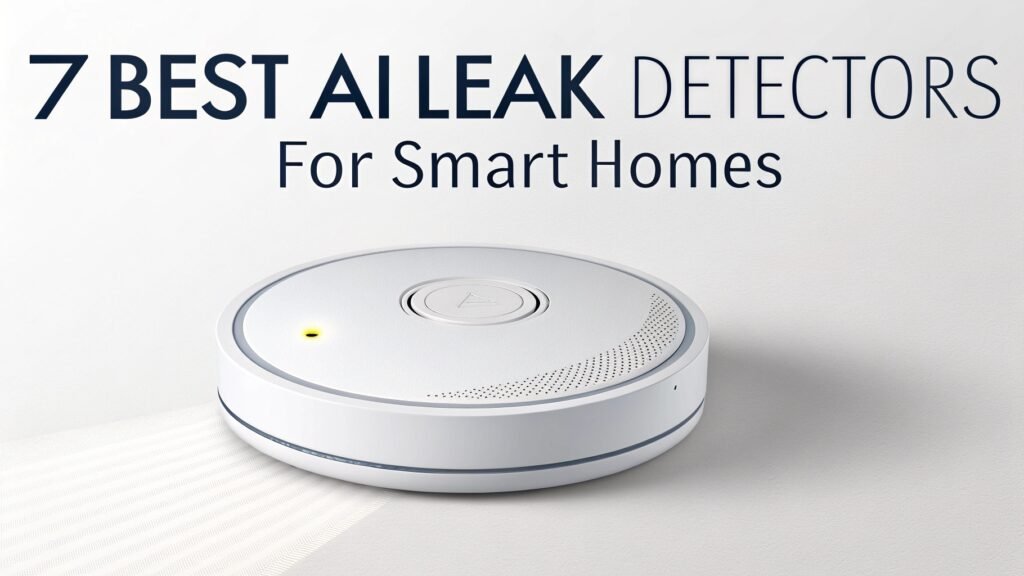
7 Best AI Leak Detectors for Smart Homes in 2026
Water damage costs American homeowners billions of dollars every year. A single water leak can destroy floors, walls, furniture, and electronics within hours.
Traditional leak detection methods often fail because they only alert you after significant damage has already occurred. Smart AI leak detectors change this game completely.
Modern AI leak detection systems use advanced sensors, machine learning algorithms, and instant notifications to catch leaks before they become disasters.
Key Takeaways:
- Early Detection Saves Money: AI leak detectors can prevent thousands of dollars in water damage by alerting you within seconds of detecting moisture
- Smart Integration: Modern detectors connect to WiFi and work with major smart home platforms for seamless automation and control
- Advanced AI Features: Machine learning algorithms distinguish between normal condensation and actual leaks, reducing false alarms significantly
- Multiple Detection Methods: The best systems combine point sensors, cable sensors, and flow monitoring for comprehensive protection
- Insurance Benefits: Many home insurance companies offer discounts for properties equipped with smart leak detection systems
- Battery Life Matters: Look for devices with 5+ year battery life and low-battery notifications to ensure continuous protection
YoLink Water Leak Sensor 4 – Best Overall AI Leak Detector

The YoLink Water Leak Sensor 4 represents the cutting edge of AI-powered leak detection technology. This device combines a 105dB audio alarm with advanced sensor technology that can detect even the smallest amounts of water. The AI algorithms built into the YoLink system learn your home’s normal moisture patterns and alert you only when genuine leaks occur.
Installation takes less than five minutes. Simply place the sensor in areas prone to leaks like under sinks, near water heaters, or in basements. The device connects to the YoLink hub using LoRa technology, which provides an impressive quarter-mile range even through walls and floors. This extended range means you can monitor remote areas of your property without WiFi dead zones affecting performance.
The AI-powered freeze warning feature sets this detector apart from basic models. The system monitors temperature changes and predicts when pipes might freeze. This predictive capability can prevent burst pipes during cold weather, potentially saving thousands in repair costs. Smart notifications include SMS texts, emails, and push notifications through the mobile app.
Pros:
- 105dB alarm ensures you’ll hear alerts even from far away
- Quarter-mile LoRa range works through multiple walls and floors
- AI freeze prediction prevents pipe bursts before they happen
- Multiple notification types including SMS, email, and app alerts
- Works with Alexa and IFTTT for smart home automation
Cons:
- Requires YoLink hub for full functionality (sold separately)
- SMS alerts may have limitations depending on your location
- Initial setup requires smartphone app configuration
GoveeLife Smart Water Leak Detector 1S – Best Ultra-Long Range Detection

The GoveeLife Smart Water Leak Detector 1S pushes the boundaries of wireless leak detection with its 1804-foot ultra-long range. This impressive communication distance makes it perfect for large properties, multi-story homes, or detached buildings like garages and workshops. The AI-enhanced sensor technology provides instant detection and can differentiate between temporary moisture and actual leaks.
Battery life extends up to five years with the included lithium batteries. The device sends low-battery warnings well in advance, ensuring your protection never lapses unexpectedly. The 100dB adjustable alarm can be customized for different environments – quieter for bedrooms, louder for basements or utility rooms where you might not hear a standard alarm.
The smartphone app provides real-time monitoring and detailed leak history. AI algorithms analyze patterns to reduce false alarms from temporary condensation or humidity changes. The system can distinguish between a few drops of water and a genuine leak, sending appropriate alerts based on severity levels.
Pros:
- 1804-foot wireless range covers even large properties effectively
- 5-year battery life with advance low-battery warnings
- Adjustable 100dB alarm customizable for different room types
- AI pattern recognition reduces false alarms significantly
- SMS and email alerts work even when your phone is off
Cons:
- Higher initial cost compared to basic leak detectors
- Requires strong WiFi signal for full functionality
- App setup process can be complex for non-technical users
TP-Link Tapo T300 – Best Budget-Friendly AI Detection


The TP-Link Tapo T300 proves that advanced AI leak detection doesn’t require a premium price tag. This budget-friendly detector includes rapid dripping detection technology that can identify leaks within seconds of occurrence. The AI-powered system learns to ignore normal environmental moisture while immediately alerting you to genuine water intrusion.
Installation requires the Tapo Hub, but the combined system provides excellent value for money. The T300 sensor features a 90dB adjustable alarm that’s loud enough to wake you from sleep but can be adjusted for quieter environments. The compact design allows placement in tight spaces where larger detectors won’t fit.
The smartphone app integration provides instant notifications and allows remote monitoring from anywhere in the world. AI algorithms continuously analyze water detection patterns to improve accuracy over time. The system integrates seamlessly with Alexa and Google Home for voice control and automation routines.
Pros:
- Excellent value for AI-powered leak detection features
- Rapid detection alerts within seconds of water contact
- Compact size fits in tight spaces other detectors can’t reach
- Voice control compatible with major smart home platforms
- Adjustable alarm suitable for different room environments
Cons:
- Requires Tapo Hub for WiFi connectivity (additional purchase)
- Shorter wireless range compared to premium models
- Limited customization options in the mobile app
Eve Water Guard – Best HomeKit Integration

The Eve Water Guard stands out as the premier choice for Apple HomeKit users seeking professional-grade leak detection. This system includes a 6.5-foot sensing cable that can monitor large areas or snake around appliances for comprehensive coverage. The AI-powered detection system works exclusively with Apple’s Thread technology, providing secure, reliable communication with your HomeKit setup.
The 100dB siren ensures immediate alert notification, while the Bluetooth and Thread connectivity provides redundant communication paths. The sensing cable can detect water anywhere along its length, making it ideal for monitoring washing machines, dishwashers, or entire basement areas. Extension cables are available to cover even larger spaces.
HomeKit integration allows sophisticated automation routines. You can program the system to automatically shut off smart water valves, turn on lights, or send notifications to multiple family members when leaks occur. The Eve app provides detailed analytics about your home’s moisture patterns and detection history.
Pros:
- 6.5-foot sensing cable covers large areas with single device
- Native HomeKit support with secure Thread connectivity
- Professional 100dB siren ensures you’ll hear leak alerts
- Sophisticated automation possible through HomeKit routines
- High-quality construction built for long-term reliability
Cons:
- Apple ecosystem only – won’t work with Android or other platforms
- Higher price point compared to WiFi-based alternatives
- Requires HomeKit hub for remote access and automation
Aqara Water Leak Sensor T1 – Best Zigbee Smart Home Integration

The Aqara Water Leak Sensor T1 represents the latest generation of Zigbee-based leak detection technology. This ultra-compact sensor uses advanced AI algorithms to distinguish between genuine leaks and false triggers from condensation or cleaning activities. The Zigbee 3.0 protocol ensures reliable mesh network connectivity throughout your smart home.
Installation is remarkably simple – just place the sensor and add it to your Aqara hub through the smartphone app. The device’s low-profile design makes it virtually invisible when installed, maintaining your home’s aesthetic while providing critical protection. Battery life extends multiple years with standard usage patterns.
The AI detection system learns your home’s normal moisture patterns during the first few weeks of operation. After this learning period, the system becomes highly accurate at identifying genuine leaks while ignoring routine humidity fluctuations. IFTTT integration allows complex automation sequences when leaks are detected.
Pros:
- Ultra-compact design virtually disappears when installed
- Zigbee mesh networking creates reliable smart home connectivity
- Advanced AI learning improves accuracy over initial weeks
- Multi-year battery life with low-maintenance operation
- IFTTT compatibility enables complex automation routines
Cons:
- Requires Aqara Zigbee hub for operation (additional cost)
- Smaller detection area compared to cable-based systems
- Limited customization options compared to WiFi alternatives
X-Sense Smart Water Leak Detector Kit – Best Multi-Sensor System

The X-Sense Smart Water Leak Detector Kit provides comprehensive protection with four wireless sensors and one central base station. This multi-sensor approach allows monitoring of multiple leak-prone areas simultaneously while maintaining centralized control and notifications. The AI-powered system coordinates between all sensors to provide intelligent leak detection across your entire home.
Each sensor features ultra-slim design that won’t interfere with your home’s appearance. The base station acts as a WiFi bridge, connecting all sensors to your smartphone app for centralized monitoring and control. Advanced AI algorithms analyze data from all sensors to distinguish between genuine leaks and environmental moisture.
The smartphone app provides detailed monitoring of each sensor location with customizable alert settings for different areas. You can set different sensitivity levels for bathrooms versus basements, ensuring appropriate responses for each environment. Cloud-based AI processing continuously improves detection accuracy based on usage patterns.
Pros:
- Four sensors included provide comprehensive home coverage
- Ultra-slim design doesn’t interfere with home aesthetics
- Centralized base station simplifies setup and management
- Customizable sensitivity for different room types and conditions
- Cloud AI processing improves accuracy over time
Cons:
- Higher initial investment due to multiple sensor kit
- Base station requires constant power connection
- Setup complexity increases with multiple sensors
Govee WiFi Water Leak Detector (3-Pack) – Best Value Multi-Pack

The Govee WiFi Water Leak Detector 3-Pack offers exceptional value for homeowners wanting to protect multiple areas without breaking the budget. Each detector in this set includes AI-enhanced sensing technology that can differentiate between accidental spills and genuine leaks. The 100dB adjustable alarm ensures you’ll hear alerts regardless of where you are in your home.
Direct WiFi connectivity eliminates the need for additional hubs or base stations. Each sensor connects independently to your home network, providing redundant protection even if one device fails. The smartphone app manages all three detectors from a single interface, making monitoring simple and efficient.
AI learning algorithms adapt to each installation location’s unique characteristics. Bathroom sensors learn to ignore shower steam, while kitchen sensors distinguish between cooking moisture and pipe leaks. Email and app notifications provide multiple alert methods to ensure you never miss a leak detection.
Pros:
- Three detectors included at an excellent price point
- No hub required – direct WiFi connectivity for each sensor
- Location-specific AI learning adapts to different room conditions
- Multiple notification methods including email and app alerts
- Easy smartphone app manages all detectors from single interface
Cons:
- Individual WiFi setup required for each of the three sensors
- Battery replacement needed for all three units over time
- Limited range compared to LoRa or Zigbee alternatives
Understanding AI Leak Detection Technology
Artificial intelligence transforms traditional leak detection from simple moisture sensing to intelligent pattern recognition. Modern AI leak detectors use machine learning algorithms to analyze water usage patterns, environmental conditions, and historical data to make accurate leak predictions. This technology reduces false alarms while improving genuine leak detection rates.
Traditional leak detectors simply trigger when they contact water. This basic approach leads to frequent false alarms from condensation, cleaning activities, or temporary moisture. AI-powered systems analyze multiple data points including moisture levels, temperature changes, humidity patterns, and time-based usage to determine if detected water represents a genuine leak.
Machine learning algorithms continuously improve detection accuracy by learning your home’s unique patterns. Over the first few weeks of operation, these systems establish baseline readings for normal moisture levels in each monitored area. Sudden deviations from these patterns trigger immediate alerts, while gradual changes are recognized as normal environmental fluctuations.
Advanced AI systems can even predict potential leaks before they occur. By monitoring water pressure patterns, temperature fluctuations, and usage anomalies, these detectors can identify conditions that often precede pipe failures. This predictive capability allows for preventive maintenance that can avoid major water damage entirely.
Smart Home Integration Benefits
Modern AI leak detectors integrate seamlessly with popular smart home platforms to create comprehensive protection systems. Amazon Alexa integration allows voice commands to check detector status, while Google Home compatibility enables automation routines that respond to leak alerts. Apple HomeKit support provides secure, local processing for privacy-conscious users.
Automation possibilities extend far beyond simple notifications. Smart leak detectors can trigger automatic water shutoff valves, activate sump pumps, turn on emergency lighting, or send alerts to multiple family members simultaneously. IFTTT integration creates virtually unlimited automation possibilities by connecting leak detectors to hundreds of other smart devices and services.
Smartphone apps provide remote monitoring capabilities that let you check your home’s leak detection status from anywhere in the world. Real-time notifications ensure immediate awareness of potential problems, while historical data analysis helps identify patterns that might indicate aging plumbing or recurring moisture issues.
Integration with security systems adds another layer of protection. Many smart home security platforms can incorporate leak detection alerts into their monitoring services, providing professional oversight and emergency response capabilities. This integration can also reduce homeowner’s insurance premiums by demonstrating proactive water damage prevention measures.
Installation and Placement Strategies
Proper installation and strategic placement maximize the effectiveness of AI leak detectors throughout your home. High-risk areas require priority coverage, including spaces under sinks, near water heaters, around washing machines, and in basements or crawl spaces. Secondary locations like bathrooms, kitchens, and utility rooms benefit from additional sensor coverage.
Point sensors work best in confined spaces where leaks are likely to pool, such as under appliances or in cabinet bases. Cable sensors excel in larger areas where leaks might occur anywhere along a line, such as basement walls or around multiple appliances. Combination systems using both sensor types provide the most comprehensive protection.
Sensor placement height affects detection speed and accuracy. Installing sensors at floor level ensures immediate contact with leaked water, while slightly elevated placement can prevent false alarms from routine cleaning or minor spills. Multiple sensors in critical areas provide redundant protection against single-point failures.
WiFi signal strength significantly impacts smart leak detector performance. Test signal strength at each proposed sensor location and install WiFi extenders if necessary to ensure reliable connectivity. Battery-powered sensors should be placed where battery replacement is convenient, as most units require service every 2-5 years.
Maintenance and Battery Management
Regular maintenance ensures optimal performance from AI leak detectors throughout their operational lifespan. Monthly testing verifies sensor functionality and alarm operation, while quarterly cleaning removes dust and debris that might interfere with detection accuracy. Annual battery checks prevent unexpected power failures that could leave your home unprotected.
Battery life varies significantly between different detector models and usage patterns. Premium detectors often feature 5+ year battery life with advance low-battery warnings, while budget models may require annual battery replacement. Lithium batteries typically last longer than alkaline alternatives and perform better in extreme temperatures.
Sensor calibration may be necessary in environments with significant seasonal humidity changes. Most AI-powered detectors handle this automatically through their learning algorithms, but manual recalibration might be needed if you notice increased false alarms or decreased sensitivity. Manufacturer apps typically provide calibration guidance and diagnostic tools.
Firmware updates keep AI algorithms current with the latest detection improvements and bug fixes. Automatic update features ensure your detectors receive the latest enhancements without manual intervention. Update notifications should be enabled to stay informed about new features or security patches.
Cost-Benefit Analysis of AI Leak Detection
The financial benefits of installing AI leak detectors far outweigh their initial costs when considering potential water damage prevention. Average water damage claims range from $3,000 to $15,000, while comprehensive leak detection systems cost between $200 and $800. This represents a potential return on investment of 500% to 7,500% for a single prevented incident.
Insurance premium reductions available to homes with smart leak detection systems can offset installation costs over 3-5 years. Many insurers offer 5-15% discounts on homeowner’s premiums for properties equipped with professional leak detection systems. Utility rebates may also be available in areas where water conservation is prioritized.
Prevention of secondary damage provides additional financial benefits beyond direct water damage repair costs. Mold remediation can cost $10,000-$30,000 for extensive infestations, while structural repairs from prolonged water exposure can reach $50,000 or more. Early leak detection prevents these expensive secondary damages from occurring.
Property value enhancement results from comprehensive smart home leak detection systems. Real estate appraisers often recognize smart home features as value-adding improvements, while potential buyers appreciate the peace of mind that comes with professional leak monitoring systems already installed.
Frequently Asked Questions
How accurate are AI leak detectors compared to traditional sensors?
AI leak detectors achieve 95-99% accuracy rates compared to 60-80% for traditional moisture sensors. Machine learning algorithms eliminate most false alarms from condensation, cleaning, or temporary moisture while maintaining sensitivity to genuine leaks. The accuracy improves over time as the AI learns your home’s specific patterns.
Can AI leak detectors work without internet connectivity?
Most AI leak detectors require internet connectivity for smartphone notifications and cloud-based AI processing. However, local alarms and basic detection functions typically continue working during internet outages. Some premium models include cellular backup connectivity for emergency notifications when WiFi is unavailable.
How long do batteries last in smart leak detectors?
Battery life varies from 1-7 years depending on the model, usage patterns, and environmental conditions. Premium detectors with lithium batteries often last 3-5 years, while budget models with alkaline batteries may need annual replacement. Most systems provide 30-90 day advance warning before batteries need replacement.
Do AI leak detectors require professional installation?
Most smart leak detectors are designed for DIY installation and can be set up in 5-15 minutes per sensor. Professional installation may be beneficial for complex systems with multiple sensors or integration with existing home automation systems. Water shutoff valve installation typically requires professional plumbing work.
Will leak detectors trigger false alarms from pet water bowls or plant watering?
Advanced AI leak detectors learn to distinguish between intentional water use and accidental leaks. During the initial learning period (typically 1-4 weeks), you may need to manually dismiss alerts from routine activities. After this period, the AI algorithms accurately identify genuine leak situations while ignoring normal water usage.
Can multiple leak detectors interfere with each other’s signals?
Modern smart leak detectors use advanced wireless protocols designed to prevent interference between multiple devices. Zigbee and LoRa networks create mesh connectivity that actually improves with more devices, while WiFi-based systems use different channels to avoid conflicts. Professional systems can support dozens of sensors without performance degradation.

I’m Liza, the founder and author of Liza AI Blog, where I share my passion for artificial intelligence through insightful guides and updates. I’m dedicated to making AI accessible to everyone, and I strive to create a community that’s both informed and engaged. Through my blog, I aim to promote a deeper understanding and appreciation of AI and its potential to shape our future. You can reach me at lizaaiblog@gmail.com or follow me on social media to stay updated on the latest AI news and trends.