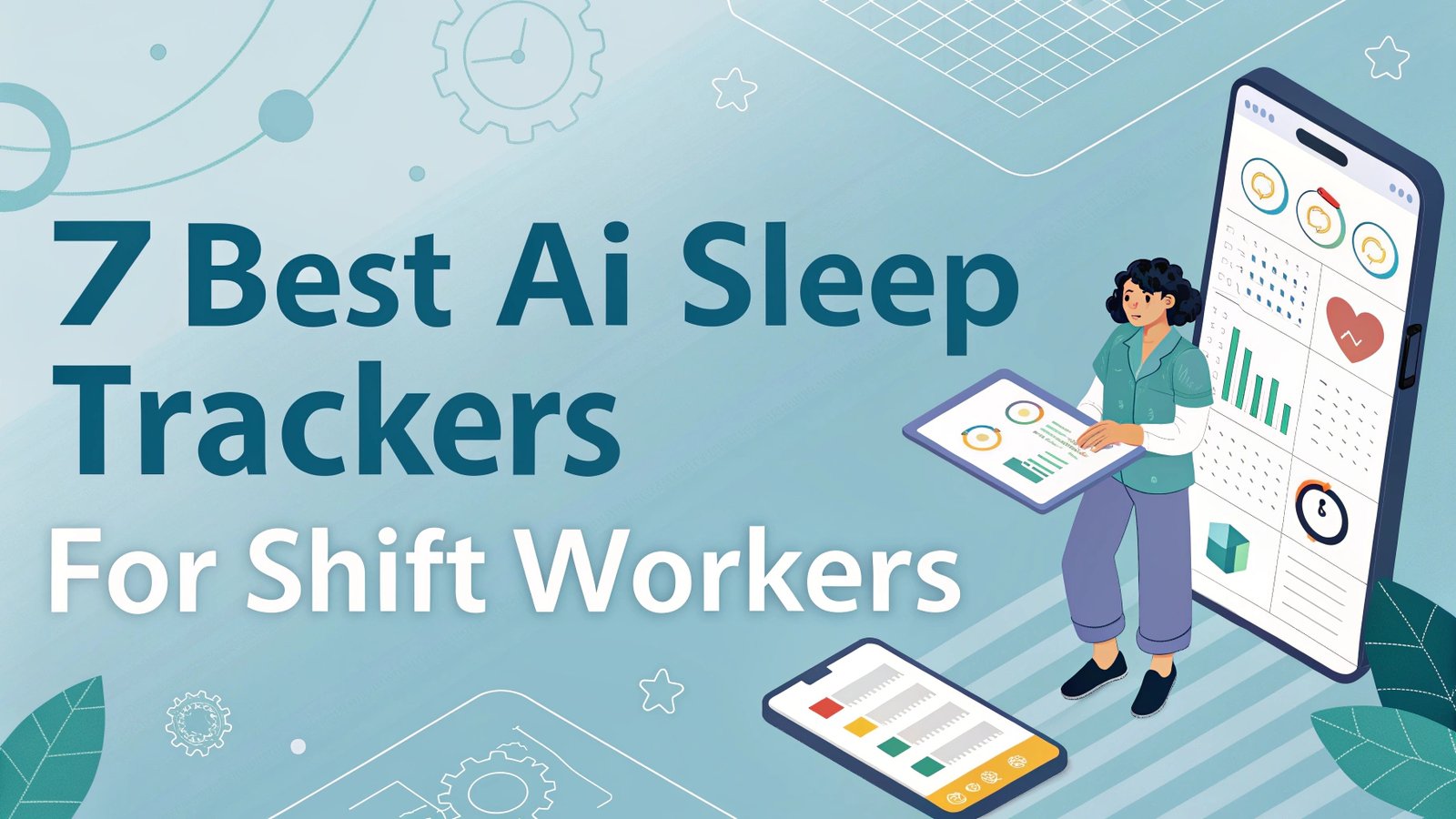
7 Best AI Sleep Trackers for Shift Workers
Sleep Trackers: Working night shifts or rotating schedules puts your body in constant battle with its natural sleep patterns.
Your circadian rhythm fights against irregular hours while you struggle to get quality rest during daylight hours.
Traditional sleep advice falls short when your bedroom window lets in afternoon sun and your neighbors mow their lawns during your “nighttime.”
Key Takeaways:
- Personalized Sleep Pattern Recognition: AI algorithms adapt to your irregular sleep schedule, tracking quality rest whether you sleep at 2 AM or 2 PM, providing accurate sleep stage analysis regardless of timing
- Circadian Rhythm Optimization: Advanced trackers monitor your body’s natural clock disruption and provide intelligent recommendations for light exposure, meal timing, and sleep environment adjustments
- Shift-Specific Recovery Metrics: Unlike standard trackers, AI-powered devices calculate recovery scores based on shift work patterns, helping you understand when your body needs extra rest or can handle demanding shifts
- Smart Wake-Up Technology: Intelligent alarm systems wake you during lighter sleep phases even during daytime sleep, reducing grogginess and improving alertness for upcoming shifts
- Long-term Health Monitoring: Continuous tracking helps identify patterns between shift schedules and sleep quality, enabling proactive adjustments to prevent chronic sleep disorders common among shift workers
- Integration with Work Schedules: Modern AI trackers sync with shift scheduling apps to predict sleep needs and optimize recovery time between rotating shifts
Oura Ring 4: The Gold Standard Smart Ring for Shift Workers

The Oura Ring 4 represents the pinnacle of wearable sleep tracking technology designed for users who demand precision and comfort during irregular sleep schedules. This fourth-generation smart ring combines advanced sensors with sophisticated AI algorithms to deliver comprehensive sleep insights specifically valuable for shift workers managing non-traditional schedules.
Ultra-precise biometric monitoring sets the Oura Ring 4 apart from traditional wearable devices. The ring continuously tracks heart rate variability, body temperature fluctuations, and movement patterns with medical-grade accuracy. For shift workers, this precision proves crucial because even small changes in these metrics can indicate circadian rhythm disruption or sleep quality degradation.
The sleek, lightweight design ensures comfort during extended wear periods, making it ideal for workers who need 24/7 monitoring without bulky wrist devices interfering with job tasks. The ring’s 8-day battery life eliminates the need for frequent charging, ensuring continuous data collection across multiple shift cycles.
AI-powered sleep stage detection analyzes your unique sleep patterns regardless of timing, providing accurate insights whether you sleep during traditional nighttime hours or bright afternoon periods. The technology adapts to your individual circadian rhythm patterns and learns from your shift schedule to deliver increasingly personalized recommendations.
Pros:
- Exceptional battery life lasting up to 8 days reduces charging interruptions
- Discreet design won’t interfere with work tasks or draw unwanted attention
- Medical-grade sensors provide highly accurate biometric data
- Advanced AI algorithms specifically optimized for irregular sleep patterns
- Comprehensive health insights including readiness scores and recovery metrics
Cons:
- Premium pricing may be prohibitive for some shift workers
- Monthly subscription required for advanced features and detailed insights
- Limited sizing options may not fit all finger sizes comfortably
- No built-in GPS for activity tracking during work shifts
Apple Watch Series 10: Advanced Sleep Intelligence for iOS Users
![Apple Watch Series 10 [GPS 46mm case] Smartwatch with Jet Black Aluminum Case with Black Sport Band - M/L. Fitness Tracker, ECG App, Always-On Retina Display, Water Resistant](https://lizaai.blog/wp-content/plugins/aawp/public/image.php?url=YUhSMGNITTZMeTl0TG0xbFpHbGhMV0Z0WVhwdmJpNWpiMjB2YVcxaFoyVnpMMGt2TXpGRGRXUXlWMjV6ZWt3dWFuQm58MTc5MDQxNzc4OA= "7 Best AI Sleep Trackers for Shift Workers 4 7 Best AI Sleep Trackers for Shift Workers")
The Apple Watch Series 10 delivers cutting-edge sleep tracking capabilities specifically enhanced for users managing irregular work schedules. Apple’s advanced sleep analysis technology combines machine learning with comprehensive health monitoring to provide shift workers with actionable insights about their rest quality and recovery patterns.
Seamless integration with iOS health ecosystem creates a comprehensive health monitoring platform that tracks sleep alongside daily activity, stress levels, and overall wellness metrics. For shift workers, this holistic approach provides valuable context about how work schedules impact overall health and recovery capabilities.
Smart alarm functionality uses advanced algorithms to wake users during optimal sleep phases, reducing grogginess common among shift workers who must sleep during daylight hours. The watch analyzes your sleep stages and timing to ensure awakening occurs during lighter sleep periods when possible.
Always-on Retina display provides easy access to sleep data and health metrics without requiring wrist gestures that might disturb partners during daytime sleep periods. The customizable watch faces can display sleep quality scores, recovery metrics, and upcoming shift reminders at a glance.
Advanced heart rate monitoring tracks heart rate variability throughout sleep periods, providing insights into stress recovery and circadian rhythm alignment. This data proves particularly valuable for shift workers whose irregular schedules can significantly impact cardiovascular health and stress management.
Pros:
- Seamless iOS integration creates comprehensive health monitoring ecosystem
- Advanced sleep stage detection provides detailed insights into sleep quality
- Smart alarm functionality optimizes wake-up timing for better alertness
- Comprehensive health tracking monitors multiple wellness metrics simultaneously
- Excellent build quality ensures durability for demanding work environments
Cons:
- Limited to iOS users excludes Android smartphone owners
- Daily charging required may interrupt continuous monitoring
- Premium pricing represents significant investment for sleep tracking
- Complex interface may overwhelm users seeking simple sleep insights
Samsung Galaxy Watch 7: AI-Powered Sleep Coaching for Android
![Samsung Galaxy Watch 7 40mm Bluetooth AI Smartwatch w/Energy Score, Wellness Tips, Heart Rate Tracking, Sleep Monitor, Fitness Tracker, 2024, Cream [US Version, 1Yr Manufacturer Warranty]](https://lizaai.blog/wp-content/plugins/aawp/public/image.php?url=YUhSMGNITTZMeTl0TG0xbFpHbGhMV0Z0WVhwdmJpNWpiMjB2YVcxaFoyVnpMMGt2TkRGTmIwRlpUR1pMYUV3dWFuQm58MTc5MDQxNzc4OA= "7 Best AI Sleep Trackers for Shift Workers 5 7 Best AI Sleep Trackers for Shift Workers")
The Samsung Galaxy Watch 7 introduces revolutionary AI-powered sleep coaching specifically designed to help shift workers optimize their rest quality and recovery timing. Samsung’s advanced sleep analysis algorithms learn from your unique work patterns to deliver personalized recommendations that adapt to rotating shifts and irregular schedules.
Energy Score technology provides daily insights into your readiness for demanding shifts based on sleep quality, recovery metrics, and stress levels. This feature proves invaluable for shift workers who need to assess their capability for high-concentration tasks or physically demanding work periods.
Wellness Tips functionality delivers personalized recommendations throughout the day to optimize sleep preparation, including ideal timing for caffeine consumption, light exposure, and meal scheduling. The AI analyzes your upcoming shift schedule and current wellness metrics to provide actionable guidance specific to your circumstances.
Advanced sleep monitoring sensors track multiple biometric indicators including heart rate variability, blood oxygen levels, and skin temperature fluctuations throughout sleep periods. For shift workers, these comprehensive measurements provide detailed insights into how irregular schedules impact sleep architecture and recovery quality.
Samsung Health integration creates a comprehensive wellness platform that tracks sleep alongside stress management, fitness activities, and nutrition patterns. This holistic approach helps shift workers understand complex relationships between lifestyle factors and sleep quality.
Pros:
- AI-powered coaching provides personalized sleep optimization strategies
- Comprehensive health tracking monitors multiple wellness indicators
- Energy Score feature helps assess readiness for demanding shifts
- Excellent Android integration optimizes performance for non-iOS users
- Competitive pricing offers premium features at accessible cost
Cons:
- Limited iOS compatibility may not sync perfectly with iPhones
- Learning curve required to fully utilize advanced AI features
- Battery life concerns with intensive sensor usage and AI processing
- Subscription features may require additional monthly costs for premium insights
Fitbit Inspire 3: Budget-Friendly AI Sleep Tracking Excellence

The Fitbit Inspire 3 delivers exceptional sleep tracking capabilities at a budget-friendly price point, making advanced sleep monitoring accessible to shift workers across all income levels. Despite its affordable pricing, this fitness tracker incorporates sophisticated AI algorithms that provide valuable insights for managing irregular sleep schedules.
24/7 heart rate monitoring tracks cardiovascular patterns throughout sleep periods, providing insights into sleep quality and stress recovery regardless of when you rest. The continuous monitoring capability ensures comprehensive data collection across rotating shift patterns and irregular sleep timing.
Sleep Score functionality analyzes multiple sleep metrics to provide daily sleep quality ratings that help shift workers understand which rest periods provide optimal recovery. The scoring system adapts to individual patterns and provides personalized recommendations for improving sleep hygiene and environment.
Stress Management features include guided breathing exercises and stress level monitoring that proves particularly valuable for shift workers managing the psychological challenges of irregular schedules. High stress levels significantly impact sleep quality, making these features essential for comprehensive sleep optimization.
Six-day battery life ensures continuous monitoring across extended shift cycles without frequent charging interruptions. This extended battery performance makes the Inspire 3 particularly suitable for workers managing rotating schedules who need consistent data collection.
Pros:
- Affordable pricing makes advanced sleep tracking accessible to all workers
- Excellent battery life provides up to 6 days of continuous monitoring
- Comprehensive sleep analysis includes sleep stages and quality scoring
- Stress management features help address psychological aspects of shift work
- User-friendly interface makes sleep data easy to understand and act upon
Cons:
- Limited smart features compared to premium smartwatches
- Basic display may be difficult to read in bright workplace environments
- No built-in GPS limits activity tracking during work shifts
- Subscription required for advanced sleep insights and coaching features
Garmin Vivoactive 5: Professional-Grade Sleep Analytics


The Garmin Vivoactive 5 represents professional-grade sleep tracking technology designed for users who demand detailed analytics and comprehensive health monitoring. This GPS smartwatch combines advanced sleep analysis with robust fitness tracking capabilities that prove invaluable for shift workers maintaining active lifestyles despite irregular schedules.
Body Battery energy monitoring provides real-time insights into energy levels throughout the day, helping shift workers optimize their rest timing and work performance. This feature analyzes sleep quality, stress levels, and activity patterns to predict when your body needs rest or can handle demanding tasks.
Sleep Coach functionality delivers personalized recommendations for improving sleep quality based on your individual patterns and upcoming schedule. The AI analyzes historical sleep data to identify trends and suggest specific adjustments to sleep timing, environment, and preparation routines.
Advanced sleep metrics include detailed analysis of sleep stages, heart rate variability, and Pulse Ox readings throughout rest periods. This comprehensive monitoring provides medical-grade insights into sleep architecture and recovery quality that proves valuable for addressing shift work sleep challenges.
11-day battery life eliminates charging concerns across extended shift rotations and ensures continuous health monitoring without interruptions. This exceptional battery performance makes the Vivoactive 5 ideal for workers managing demanding schedules with limited time for device maintenance.
Pros:
- Exceptional battery life lasting up to 11 days reduces maintenance requirements
- Professional-grade analytics provide detailed sleep and health insights
- Body Battery feature helps optimize energy management for shift work
- Robust build quality ensures durability in demanding work environments
- No subscription required for basic sleep tracking and analysis features
Cons:
- Complex interface may overwhelm users seeking simple sleep insights
- Premium pricing represents significant investment for sleep tracking
- Learning curve required to fully utilize advanced analytics features
- Limited smart features compared to Apple Watch or Samsung alternatives
IAMJOY Smart Health Wristband: Comprehensive Sleep Monitoring

The IAMJOY Smart Health Wristband offers comprehensive sleep monitoring capabilities specifically designed for users seeking detailed health insights at an accessible price point. This advanced fitness tracker incorporates multiple health sensors to provide shift workers with valuable data about sleep quality, stress levels, and overall wellness patterns.
All-day automatic health monitoring tracks heart rate, blood pressure, and blood oxygen levels continuously throughout sleep periods, providing detailed insights into how shift work impacts cardiovascular health and recovery quality. This comprehensive monitoring proves particularly valuable for identifying health risks associated with irregular sleep schedules.
Multi-sport mode functionality accommodates active shift workers who maintain fitness routines despite irregular schedules. The device tracks various activities and correlates exercise timing with sleep quality to help optimize both fitness and rest patterns.
Stress monitoring capabilities analyze heart rate variability patterns to identify stress levels throughout work and sleep periods. For shift workers managing the psychological challenges of irregular schedules, this feature provides valuable insights into stress management and recovery optimization.
Wellness improvement features provide personalized recommendations for optimizing sleep environment, timing, and preparation routines based on individual health data and sleep patterns. The AI analyzes multiple health metrics to deliver actionable guidance specific to shift work challenges.
Pros:
- Comprehensive health monitoring tracks multiple vital signs continuously
- Multi-sport tracking accommodates active lifestyles despite irregular schedules
- Stress analysis features help manage psychological aspects of shift work
- Free companion app provides detailed health insights without subscription fees
- Affordable pricing makes advanced health monitoring accessible
Cons:
- Limited brand recognition may raise concerns about long-term support
- Basic smart features compared to premium smartwatch alternatives
- Accuracy questions for advanced health metrics in budget-priced device
- Limited integration with popular health and fitness ecosystems
Amazfit Helio Strap: Long-Battery Sleep Tracking Champion

The Amazfit Helio Strap delivers exceptional battery performance combined with comprehensive sleep tracking capabilities that make it ideal for shift workers requiring continuous monitoring across extended work rotations. This fitness tracker focuses on essential health metrics while maintaining impressive battery life that eliminates charging concerns.
10-day battery life ensures uninterrupted sleep tracking across multiple shift cycles, making it particularly valuable for workers managing rotating schedules or extended work periods. The exceptional battery performance eliminates the need for daily charging routines that can interrupt continuous health monitoring.
24/7 activity and sleep tracking monitors heart rate patterns, sleep stages, and recovery metrics throughout irregular sleep periods, providing comprehensive insights into how shift work impacts rest quality and overall health. The continuous monitoring capability ensures complete data collection regardless of sleep timing.
27 sports modes accommodate diverse fitness activities that many shift workers use to maintain health despite irregular schedules. The device tracks various exercises and correlates physical activity with sleep quality to help optimize both fitness and recovery patterns.
Subscription-free operation provides full access to health insights without ongoing monthly costs, making it an economical choice for shift workers seeking comprehensive sleep tracking without additional financial burdens. All features remain accessible through the free companion application.
Pros:
- Exceptional 10-day battery life eliminates frequent charging requirements
- Comprehensive sleep analysis provides detailed insights into rest quality
- No subscription fees required for full feature access and health insights
- Multiple sport modes accommodate diverse fitness activities and tracking needs
- Amazon’s Choice recognition indicates strong customer satisfaction and reliability
Cons:
- Limited smart features compared to full smartwatch alternatives
- Basic display may be difficult to read in challenging work environments
- Newer brand may have limited long-term support compared to established competitors
- Limited ecosystem integration with popular health and fitness platforms
Choosing the Right AI Sleep Tracker for Your Shift Schedule
Selecting the optimal AI sleep tracker for shift work requires careful consideration of your specific work patterns, lifestyle needs, and budget constraints. Different devices excel in various areas, making it essential to prioritize features that align with your unique circumstances and sleep optimization goals.
Work schedule patterns significantly impact which features provide the most value for your sleep tracking needs. Rotating shift workers benefit most from devices with advanced AI algorithms that adapt to changing sleep timing, while permanent night shift workers may prioritize environmental monitoring and circadian rhythm analysis features.
Budget considerations play a crucial role in device selection, with options ranging from affordable fitness trackers to premium smartwatches. Higher-priced devices typically offer more sophisticated AI capabilities, longer battery life, and comprehensive health monitoring, but budget-friendly options can still provide valuable sleep insights for cost-conscious workers.
Integration with existing technology ecosystem influences long-term satisfaction and usability. iOS users benefit from Apple Watch integration, while Android users may prefer Samsung or other Android-compatible devices that sync seamlessly with their smartphones and existing health applications.
Battery life requirements vary based on work schedule demands and charging opportunities. Extended shift rotations require devices with exceptional battery performance, while workers with regular charging opportunities can prioritize advanced features over battery longevity.
Setting Up Your AI Sleep Tracker for Shift Work Success
Proper setup and configuration prove essential for maximizing the effectiveness of AI sleep tracking technology for shift work applications. Initial device configuration should include accurate work schedule input, sleep goal adjustments, and environmental factor customization to ensure algorithms provide relevant insights and recommendations.
Work schedule synchronization enables AI algorithms to understand your unique patterns and provide contextually relevant sleep analysis. Input your shift timing, rotation patterns, and typical sleep windows to help the device distinguish between intentional daytime sleep and disrupted nighttime rest.
Sleep goal customization should reflect realistic expectations for shift workers rather than standard eight-hour nighttime sleep recommendations. Adjust target sleep duration based on your work demands, and set flexible timing windows that accommodate variable sleep schedules without triggering false alerts.
Environmental monitoring setup includes configuring sensors for bedroom conditions during daytime sleep periods. Enable temperature tracking, light level monitoring, and noise detection to help identify environmental factors that impact sleep quality during non-traditional rest hours.
Notification and alarm optimization ensures sleep tracking doesn’t interfere with necessary rest while providing valuable wake-up assistance. Configure smart alarms for optimal sleep phase awakening, and adjust notification settings to avoid sleep disruption during daytime rest periods.
Maximizing Sleep Quality with AI Insights and Recommendations
AI sleep tracking technology provides valuable data and recommendations, but maximizing sleep quality requires active implementation of insights and consistent sleep hygiene practices tailored to shift work challenges. Understanding how to interpret and act on AI-generated recommendations proves crucial for achieving optimal rest quality.
Sleep score interpretation helps identify patterns and trends in rest quality across different shift patterns and environmental conditions. Focus on long-term trends rather than daily fluctuations, and use score variations to identify factors that consistently improve or degrade sleep quality.
Recovery metrics analysis provides insights into physical and mental readiness for demanding work shifts. Pay attention to heart rate variability trends, stress recovery indicators, and energy level predictions to optimize work performance and prevent burnout.
Environmental optimization recommendations from AI analysis help create ideal daytime sleep conditions. Implement suggestions for bedroom temperature, lighting control, and noise reduction to improve sleep quality during non-traditional rest hours when external factors can significantly impact rest.
Timing recommendations for sleep preparation, meals, and light exposure help align circadian rhythms with work schedule demands. Follow AI-generated guidance for optimizing melatonin production, managing caffeine consumption, and using light therapy effectively.
The Future of AI Sleep Tracking for Shift Workers
Emerging technologies and advancing AI capabilities promise revolutionary improvements in sleep tracking and optimization for shift workers. Future developments will likely include more sophisticated circadian rhythm modeling, predictive health analytics, and integrated workplace wellness programs specifically designed for irregular schedule management.
Advanced biometric monitoring will incorporate additional sensors and health markers to provide even more comprehensive insights into how shift work impacts overall health and wellness. Expect integration of continuous glucose monitoring, advanced stress hormones, and environmental toxin exposure tracking.
Predictive analytics evolution will enable AI systems to forecast sleep needs and health risks with increasing accuracy, allowing proactive interventions before sleep quality degradation occurs. Machine learning algorithms will become more sophisticated at identifying subtle patterns and correlations.
Workplace integration opportunities include direct communication between sleep trackers and shift scheduling systems to optimize work assignments based on individual sleep quality and recovery metrics. This integration could revolutionize how employers manage shift worker health and productivity.
Personalized sleep interventions will become increasingly sophisticated, with AI systems recommending specific sleep aids, environmental modifications, and lifestyle adjustments tailored to individual circadian rhythm patterns and work schedule demands.
Frequently Asked Questions
Do AI sleep trackers work accurately for daytime sleep periods?
Modern AI sleep trackers are specifically designed to accurately monitor sleep regardless of timing. Advanced algorithms distinguish between intentional daytime sleep and brief naps, providing accurate sleep stage analysis and quality metrics. The key is proper device setup with correct shift schedule information so the AI understands your sleep patterns.
How long does it take for AI sleep trackers to learn shift work patterns?
Most AI sleep tracking systems require 2-4 weeks of consistent wear to establish baseline patterns and begin providing personalized recommendations. However, basic sleep stage detection and quality scoring typically work immediately. The longer you wear the device, the more accurate and personalized the insights become.
Can AI sleep trackers help prevent shift work sleep disorder?
AI sleep trackers provide valuable early warning indicators for developing sleep disorders by monitoring trends in sleep quality, recovery metrics, and circadian rhythm disruption. While they cannot prevent disorders directly, the data and recommendations help users make proactive lifestyle adjustments and seek medical attention when necessary.
Are expensive AI sleep trackers significantly better than budget options?
Premium AI sleep trackers typically offer more sophisticated algorithms, longer battery life, and additional health metrics, but budget options can still provide valuable sleep insights. The key differences lie in AI sophistication, build quality, and ecosystem integration rather than basic sleep tracking accuracy.
Do AI sleep trackers require smartphone apps to function properly?
Yes, smartphone apps are essential for AI sleep tracker functionality. The apps process collected data using advanced algorithms, provide personalized insights, and deliver recommendations. Most trackers store basic data locally but require app connectivity for full AI analysis and coaching features.
How do AI sleep trackers handle rotating shift schedules?
Advanced AI sleep trackers automatically adapt to changing shift patterns when provided with schedule information. The algorithms recognize pattern variations and adjust sleep analysis accordingly. Some devices sync with shift scheduling apps to automatically update expected sleep timing and provide relevant recommendations.

I’m Liza, the founder and author of Liza AI Blog, where I share my passion for artificial intelligence through insightful guides and updates. I’m dedicated to making AI accessible to everyone, and I strive to create a community that’s both informed and engaged. Through my blog, I aim to promote a deeper understanding and appreciation of AI and its potential to shape our future. You can reach me at lizaaiblog@gmail.com or follow me on social media to stay updated on the latest AI news and trends.