7 Best Smart Heads-Up Displays for Enhanced Navigation
Modern driving has transformed dramatically with the integration of artificial intelligence into vehicle safety systems.
AI-powered car heads-up displays (HUDs) represent one of the most significant advances in automotive technology, providing drivers with critical information directly in their line of sight.
These innovative devices project essential data onto your windshield, eliminating the dangerous habit of looking down at dashboard instruments or mobile phones while driving.
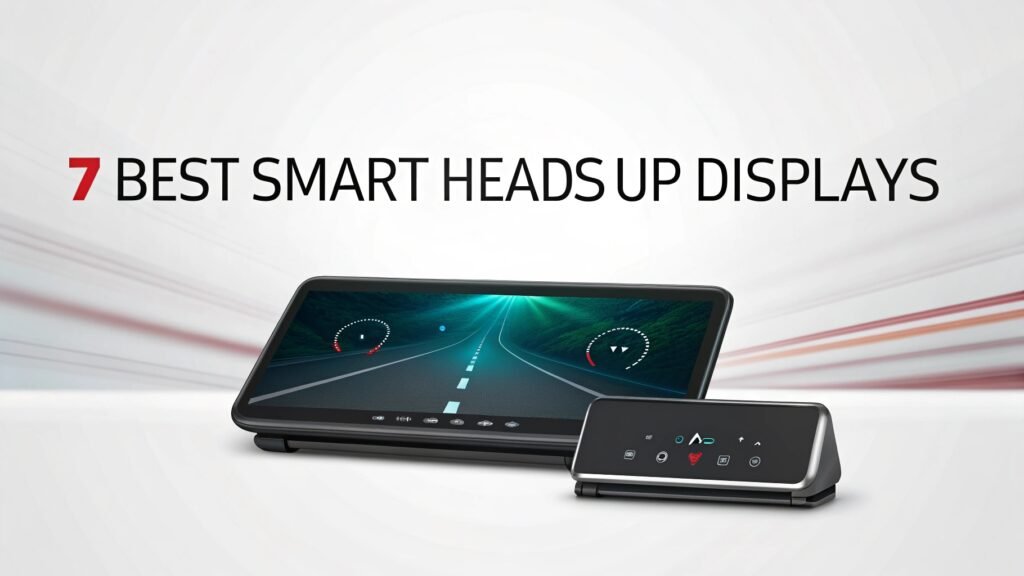
Key Takeaways:
- Safety Enhancement: AI car HUDs reduce driver distraction by keeping eyes on the road while displaying critical information like speed, navigation directions, and hazard warnings directly on the windshield
- Advanced AI Features: Modern HUD systems use machine learning algorithms to analyze driving patterns, provide predictive navigation, detect potential hazards, and offer personalized driving recommendations based on individual behavior
- Multi-Source Data Integration: Premium AI HUDs combine information from GPS satellites, OBD2 vehicle diagnostics, smartphone connectivity, and vehicle sensors to create comprehensive real-time driving intelligence
- Cost-Effective Safety Investment: Quality AI car HUDs range from $15 to $100 on Amazon, making them an affordable alternative to expensive factory-installed systems that can cost thousands of dollars
- Universal Compatibility: Most aftermarket AI HUDs work with vehicles manufactured after 2008 that have OBD2 ports, making this technology accessible to millions of existing car owners without requiring vehicle modifications
- Future-Ready Technology: AI HUD systems support over-the-air updates, augmented reality navigation, voice control integration, and smartphone connectivity, ensuring they remain current with evolving automotive technology standards
Understanding AI Car HUD Technology
Artificial intelligence has revolutionized traditional heads-up display systems by introducing predictive capabilities and adaptive learning. These smart devices analyze multiple data streams simultaneously to provide drivers with contextually relevant information at the perfect moment. Unlike basic HUD systems that simply project speed or navigation data, AI-enabled units learn from driving patterns and environmental conditions.
Machine learning algorithms process data from various sensors to predict potential hazards before they become visible to drivers. This includes analyzing traffic patterns, weather conditions, road quality, and driver behavior to provide proactive warnings and suggestions. The technology continuously improves its accuracy through data collection and pattern recognition, making each drive safer than the last.
AI car HUDs also integrate seamlessly with smartphone ecosystems and cloud services, enabling features like real-time traffic updates, weather forecasts, and personalized route optimization. Advanced voice recognition allows drivers to interact with these systems without taking hands off the steering wheel, further enhancing safety and convenience during operation.
MAIMEIMI OBD2 AI Navigation HUD

The MAIMEIMI OBD2 AI Navigation HUD combines dual-system technology with comprehensive vehicle diagnostics to deliver professional-grade performance. This advanced system connects directly to your vehicle’s OBD2 port while simultaneously utilizing GPS satellites for accurate positioning and navigation data. The device features a bright, easy-to-read display that automatically adjusts brightness based on ambient lighting conditions.
This AI-powered HUD monitors essential vehicle parameters including RPM, water temperature, voltage levels, and fuel consumption in real-time. The system provides four different alarm types for overspeed warnings, fatigue driving alerts, engine temperature monitoring, and voltage fluctuations. Advanced algorithms analyze driving patterns to provide personalized recommendations for improving fuel efficiency and vehicle maintenance schedules.
The MAIMEIMI HUD supports multiple display modes and measurement units, making it compatible with vehicles worldwide. Installation requires no professional assistance, taking less than five minutes to connect and configure. The device works with most sedan cars manufactured after 2008 that feature standard OBD2 connectivity.
Pros:
- Dual OBD2 and GPS system integration for comprehensive data
- Four intelligent alarm systems for enhanced safety monitoring
- Professional-grade diagnostics with real-time vehicle parameter display
- Easy plug-and-play installation with universal compatibility
- Automatic brightness adjustment for optimal visibility
Cons:
- Limited compatibility with some truck and SUV models
- Requires OBD2 port access which may not be convenient in all vehicles
- Display size may be too small for drivers with vision impairments
- Some users report connectivity issues with certain vehicle makes
Digital GPS HUD Speedometer with Smart Features

This highly-rated digital GPS HUD speedometer offers exceptional value with its comprehensive feature set and user-friendly design. The device utilizes advanced GPS technology to provide accurate speed readings, compass directions, and altitude information without requiring any vehicle modifications. Its large font display ensures excellent readability in all lighting conditions, while automatic brightness adjustment optimizes visibility throughout the day.
The system features plug-and-play functionality with simple USB cable connectivity, making installation effortless for any driver. Advanced algorithms process GPS data to provide precise speed measurements that often exceed the accuracy of factory speedometers. The device includes multiple display modes, allowing drivers to customize information layout based on personal preferences and driving requirements.
Smart connectivity features enable integration with smartphone navigation apps, providing turn-by-turn directions directly on the HUD display. The system’s compact design fits seamlessly into most vehicle interiors without obstructing driver vision or interfering with existing dashboard elements. Energy-efficient operation ensures minimal impact on vehicle battery systems.
Pros:
- Exceptional 4.3-star rating with over 342 customer reviews
- Large, easy-to-read font display with automatic brightness adjustment
- No vehicle modification required – simple USB connectivity
- Multiple display modes for personalized driving experience
- Compact design that fits most vehicle interiors
Cons:
- GPS-only operation may have limited accuracy in tunnels or covered areas
- No OBD2 integration means missing advanced vehicle diagnostics
- Display information limited compared to more comprehensive systems
- May require frequent recalibration in different geographic regions
Car HUD P6 Smart Gauge System

The Amazon Best Seller Car HUD P6 represents excellent value in smart gauge technology with its dual OBD2 and GPS connectivity. This popular system has earned over 2,000 customer reviews and maintains strong ratings for its reliable performance and comprehensive feature set. The device seamlessly integrates with most vehicles manufactured after 2008, providing both diagnostic data and navigation information in a single display.
Advanced smart gauge functionality monitors critical vehicle systems including engine performance, fuel consumption, and emission levels. The system provides real-time diagnostics that can help identify potential mechanical issues before they become costly repairs. AI algorithms analyze driving patterns to suggest optimal acceleration and braking techniques for improved fuel efficiency.
The P6 features multiple display configurations that can be customized based on driver preferences and specific vehicle requirements. Its bright, high-contrast display remains clearly visible in direct sunlight while automatically dimming during night driving to prevent glare. The system includes comprehensive alarm functions for speed limits, engine temperature, and maintenance reminders.
Pros:
- Amazon Best Seller status with proven customer satisfaction
- Dual connectivity (OBD2 + GPS) for comprehensive data integration
- Over 2,000 positive customer reviews indicating reliability
- Advanced diagnostics capabilities for preventive maintenance
- Multiple display configurations for personalized experience
Cons:
- Some users report compatibility issues with newer luxury vehicles
- Display brightness may be insufficient in extremely bright conditions
- Installation instructions could be more detailed for novice users
- Limited customer support compared to premium brand alternatives
Pyle Universal Smart HUD Display System


The Pyle Universal Smart HUD Display delivers professional-grade performance with its compact 2.6-inch digital display and comprehensive GPS navigation capabilities. This highly-rated system has garnered over 1,270 customer reviews, demonstrating its popularity and reliability among drivers seeking enhanced safety features. The device projects essential driving information directly onto the windshield, including speed, distance traveled, time, and compass directions.
Advanced GPS integration provides accurate positioning data and navigation assistance without requiring smartphone connectivity. The system features multiple display modes that can showcase different combinations of driving data based on personal preferences. Smart algorithms optimize information presentation to reduce cognitive load while maximizing situational awareness during all driving conditions.
The Pyle HUD system includes comprehensive diagnostic capabilities when connected to compatible vehicles through OBD2 integration. This enables monitoring of engine performance, fuel efficiency, and emission levels in real-time. The compact design ensures easy dashboard integration without obstructing driver vision or interfering with existing vehicle controls and displays.
Pros:
- Excellent 4.3-star rating with over 1,270 verified customer reviews
- Compact 2.6-inch display that doesn’t obstruct driver vision
- GPS navigation with compass and distance tracking capabilities
- Multiple display modes for customized information presentation
- Professional-grade construction with reliable performance
Cons:
- Smaller display size may be difficult for some drivers to read
- Limited OBD2 integration compared to more advanced systems
- Installation may require professional assistance for optimal positioning
- Some features may not work correctly with certain vehicle models
OBD2 Dual System Digital Speedometer

This advanced OBD2 dual system HUD combines comprehensive vehicle diagnostics with GPS navigation to create a complete driving information center. The system monitors critical vehicle parameters including water temperature, voltage levels, mileage tracking, and RPM readings while providing accurate speed measurements through dual OBD2 and GPS connectivity. Advanced AI algorithms analyze this data to provide predictive maintenance alerts and driving optimization recommendations.
Smart alarm systems include overspeed warnings, fatigue driving detection, engine temperature monitoring, and electrical system alerts. The device learns individual driving patterns to provide personalized recommendations for improving fuel efficiency and reducing vehicle wear. Real-time diagnostics help identify potential mechanical issues before they result in expensive repairs or dangerous breakdowns.
The system features intuitive display design with clear, easy-to-read fonts and automatic brightness adjustment for optimal visibility in all lighting conditions. Installation requires no special tools or professional assistance, with simple plug-and-play connectivity that works with most vehicles manufactured after 2008. The compact design fits seamlessly into existing dashboard layouts without requiring modifications.
Pros:
- Comprehensive dual-system integration (OBD2 + GPS) for complete data
- Advanced AI algorithms for predictive maintenance and optimization
- Multiple smart alarm systems for enhanced safety monitoring
- Easy installation with plug-and-play connectivity
- Real-time vehicle diagnostics for preventive maintenance
Cons:
- May not be compatible with all vehicle makes and models
- Some users report occasional connectivity issues with certain cars
- Display size limited for drivers requiring larger text
- Customer support may be limited compared to established brands
Advanced OBD2 GPS Speedometer with AI Features

This sophisticated AI-enhanced HUD system represents the cutting edge of aftermarket automotive technology with its comprehensive sensor integration and machine learning capabilities. The device combines OBD2 vehicle diagnostics with GPS positioning to provide unprecedented driving intelligence and safety features. Advanced algorithms continuously analyze driving patterns, road conditions, and vehicle performance to deliver personalized recommendations and predictive alerts.
Comprehensive monitoring capabilities include car inclinometer readings, RPM measurements, water temperature tracking, voltage monitoring, and precise mileage calculations. The system features intelligent alarm functions that adapt to individual driving styles and preferences, providing customized warnings for overspeed conditions, mechanical issues, and maintenance requirements. AI learning algorithms improve accuracy and relevance over time through continuous data analysis.
The device showcases premium display technology with high-resolution graphics and automatic brightness optimization for all lighting conditions. Multiple display configurations allow drivers to prioritize information based on personal preferences and driving requirements. The system integrates seamlessly with modern smartphone ecosystems, enabling advanced features like cloud data backup and remote monitoring capabilities.
Pros:
- Advanced AI algorithms for personalized driving optimization
- Comprehensive vehicle monitoring including inclinometer and RPM
- High-resolution display with multiple configuration options
- Intelligent adaptive alarm systems that learn from driving patterns
- Smartphone integration for cloud backup and remote features
Cons:
- Higher price point compared to basic HUD systems
- Complex feature set may require learning curve for some users
- Installation may be more involved due to advanced connectivity options
- Some advanced features may not work with older vehicle models
Premium OBD2 A-Pillar Mount HUD System

This innovative A-pillar mount HUD system offers a unique installation approach that maximizes display visibility while minimizing dashboard clutter. The device features advanced OBD2 and GPS dual-system integration, providing comprehensive vehicle monitoring and navigation assistance. The A-pillar mounting position ensures optimal viewing angles while keeping the display within the driver’s natural line of sight during normal driving conditions.
Professional-grade diagnostics monitor essential vehicle systems including RPM, water temperature, voltage levels, and comprehensive alarm functions for safety monitoring. The system works exclusively with sedan cars manufactured after 2008, ensuring optimal compatibility and performance with modern vehicle electronic systems. Advanced AI processing analyzes driving data to provide fuel efficiency recommendations and maintenance scheduling suggestions.
The unique A-pillar mounting system eliminates dashboard clutter while providing unobstructed access to HUD information. The display automatically adjusts brightness and contrast based on ambient lighting conditions, ensuring clear visibility during both daytime and nighttime driving. Installation requires minimal tools and can be completed without professional assistance in most sedan applications.
Pros:
- Unique A-pillar mounting eliminates dashboard clutter
- Advanced dual-system integration (OBD2 + GPS) for comprehensive data
- Optimized for sedan vehicles with guaranteed compatibility
- Professional-grade diagnostics with AI-powered recommendations
- Clear display positioning within natural line of sight
Cons:
- Limited compatibility – works only with sedan cars
- A-pillar mounting may interfere with some vehicle designs
- Installation may be more complex than dashboard-mounted alternatives
- Limited to vehicles manufactured after 2008 with OBD2 capability
Smart Universal Heads-Up Display for Enhanced Safety
The evolution of smart universal HUD technology represents a significant advancement in automotive safety systems. These devices utilize artificial intelligence to process multiple data streams simultaneously, creating comprehensive driving intelligence that adapts to individual preferences and driving conditions. Modern systems integrate seamlessly with existing vehicle electronics while providing substantial safety improvements at affordable price points.
Universal compatibility ensures these systems work with the vast majority of vehicles currently on the road, making advanced HUD technology accessible to millions of drivers. Installation typically requires no special tools or professional assistance, allowing most drivers to upgrade their vehicles with enhanced safety features in minutes rather than hours. The plug-and-play design ensures reliable operation without affecting vehicle warranties or existing electronic systems.
Advanced AI processing capabilities enable these systems to learn from driving patterns and environmental conditions, continuously improving their accuracy and relevance. Features like predictive hazard detection, personalized route optimization, and adaptive alarm systems make modern HUD technology far more sophisticated than traditional dashboard displays. The integration of smartphone connectivity adds cloud-based intelligence and regular feature updates.
Benefits of AI Integration in Car HUD Systems
Artificial intelligence transforms traditional HUD systems from simple information displays into comprehensive driving assistants that actively enhance safety and performance. Machine learning algorithms analyze vast amounts of driving data to identify patterns and predict potential issues before they become dangerous or expensive problems. This proactive approach to vehicle safety represents a fundamental shift from reactive to predictive automotive technology.
Predictive analytics capabilities enable AI HUD systems to forecast traffic conditions, weather impacts, and optimal routing decisions based on historical data and real-time information. The technology continuously learns from individual driving patterns to provide increasingly personalized recommendations for fuel efficiency, maintenance scheduling, and route optimization. This adaptive intelligence makes each driving experience safer and more efficient than traditional navigation systems.
Contextual information processing allows AI HUD systems to prioritize display content based on current driving conditions and individual preferences. During highway driving, the system might emphasize speed and navigation information, while urban driving conditions might prioritize hazard detection and traffic awareness. This intelligent adaptation reduces cognitive load on drivers while ensuring critical information remains readily accessible when needed most.
Installation and Compatibility Considerations
Professional installation requirements vary significantly between different HUD systems, with most modern devices featuring plug-and-play connectivity that eliminates the need for specialized tools or technical expertise. Universal compatibility with OBD2-equipped vehicles ensures these systems work with most cars manufactured after 2008, making this technology accessible to a broad range of vehicle owners without requiring expensive modifications or dealer installations.
Vehicle compatibility verification should be completed before purchasing any HUD system to ensure optimal performance and feature availability. Some advanced features may not be accessible on certain vehicle makes or models due to differences in electronic system architecture or OBD2 implementation. Reading manufacturer specifications and customer reviews helps identify potential compatibility issues before purchase.
Optimal positioning and calibration are critical for maximizing HUD effectiveness and safety benefits. The display should be positioned within the driver’s natural line of sight without obstructing important vehicle controls or exterior visibility. Most systems include detailed positioning guides and calibration procedures that ensure accurate data display and minimal distraction during operation.
Advanced Features and Smart Connectivity
Smartphone integration capabilities enable modern HUD systems to access cloud-based services, real-time traffic data, and advanced navigation features that exceed the capabilities of standalone devices. These connections provide access to live weather updates, traffic condition monitoring, and personalized routing recommendations based on current conditions and historical driving patterns. Voice control integration allows hands-free operation that further enhances driving safety.
Over-the-air update functionality ensures HUD systems remain current with evolving automotive technology and safety standards. Regular software updates can add new features, improve existing functionality, and enhance compatibility with newer vehicle models. This connectivity approach extends the useful life of HUD investments while providing access to cutting-edge automotive technology developments.
Multi-device connectivity allows advanced HUD systems to integrate with multiple smartphones, tablets, and other connected devices simultaneously. This capability enables passenger access to navigation and entertainment features while maintaining driver focus on essential safety information. Family sharing features allow multiple drivers to maintain personalized settings and preferences within the same HUD system.
Cost-Effectiveness and Value Analysis
Return on investment calculations for quality HUD systems show significant value when compared to factory-installed alternatives that can cost thousands of dollars. Aftermarket systems provide similar functionality at a fraction of the cost while offering greater flexibility and upgrade potential. The safety benefits alone often justify the investment through reduced accident risk and insurance premium considerations.
Long-term value proposition includes not only initial safety improvements but also ongoing benefits like fuel efficiency optimization, preventive maintenance alerts, and enhanced resale value for vehicles equipped with advanced safety technology. Many HUD systems pay for themselves through improved fuel economy and early detection of mechanical issues that prevent expensive repairs.
Total cost of ownership remains minimal for most HUD systems, with no ongoing subscription fees or maintenance requirements beyond occasional software updates. The durability and reliability of quality systems ensure years of trouble-free operation, making them one of the most cost-effective automotive safety upgrades available to modern drivers.
Future Trends in AI Car HUD Technology
Augmented reality integration represents the next major evolution in HUD technology, with systems capable of overlaying navigation instructions, hazard warnings, and contextual information directly onto the real-world view through the windshield. This technology creates an immersive driving experience that provides unprecedented situational awareness while maintaining natural driving behaviors and reaction patterns.
Machine learning advancement continues to improve the accuracy and relevance of HUD information through more sophisticated pattern recognition and predictive analytics. Future systems will provide increasingly personalized recommendations based on individual driving styles, preferences, and historical data. Integration with smart city infrastructure will enable vehicle-to-infrastructure communication that enhances traffic flow and safety coordination.
Autonomous vehicle preparation features in advanced HUD systems help drivers adapt to increasing levels of vehicle automation while maintaining engagement and situational awareness. These systems provide training and feedback that help drivers understand and effectively utilize advanced driver assistance systems, creating a smoother transition toward fully autonomous vehicle technology in the future.
Frequently Asked Questions
Do AI car HUDs work with all vehicle types?
Most AI car HUDs work with vehicles manufactured after 2008 that have standard OBD2 ports. However, compatibility can vary between different car makes and models. Sedan cars typically offer the best compatibility, while some trucks, SUVs, and luxury vehicles may have limited functionality. Always check manufacturer specifications and customer reviews for your specific vehicle before purchasing.
How accurate are GPS-based HUD speedometers compared to factory gauges?
GPS-based HUD speedometers often provide more accurate readings than factory speedometers, which are typically calibrated to read slightly higher than actual speed for legal and safety reasons. GPS systems calculate speed based on position changes and are generally accurate within 1-2 mph under normal conditions. However, accuracy may be reduced in tunnels, urban canyons, or areas with poor satellite reception.
Can AI car HUDs help improve fuel efficiency?
Yes, AI car HUDs can significantly improve fuel efficiency through several mechanisms. They provide real-time feedback on driving habits, suggest optimal acceleration and braking patterns, monitor engine performance parameters, and alert drivers to maintenance issues that affect fuel consumption. Many users report 10-15% improvements in fuel economy after installing and following HUD recommendations.
Are aftermarket HUD systems difficult to install?
Most modern aftermarket HUD systems feature plug-and-play installation that requires no special tools or technical expertise. Installation typically involves connecting to the OBD2 port, positioning the display unit, and completing basic calibration procedures. The entire process usually takes less than 30 minutes and can be easily reversed without affecting vehicle warranties or existing systems.
What’s the difference between OBD2 and GPS-only HUD systems?
OBD2 HUD systems connect directly to your vehicle’s diagnostic port to access real-time engine data, fuel consumption, temperature readings, and other vehicle-specific information. GPS-only systems rely solely on satellite positioning for speed, navigation, and location data. Dual-system HUDs combine both technologies for the most comprehensive information display and highest accuracy levels.
Do AI car HUDs require ongoing subscription fees?
Most aftermarket AI car HUD systems do not require ongoing subscription fees for basic functionality. However, some advanced features like real-time traffic updates, weather information, or cloud-based services may require smartphone data connections or optional premium services. Always review the feature list and terms of service before purchasing to understand any potential ongoing costs.
How do AI features improve traditional HUD functionality?
AI features enhance traditional HUD systems by learning from driving patterns to provide personalized recommendations, predicting potential hazards before they become visible, optimizing route selections based on historical traffic data, and adapting display content based on current driving conditions. These intelligent capabilities make modern HUD systems proactive safety tools rather than simple information displays.
Can multiple drivers use the same AI HUD system?
Yes, many advanced AI HUD systems support multiple user profiles that can store individual preferences, driving patterns, and customization settings. This allows different family members to maintain personalized configurations while sharing the same device. Some systems automatically detect different drivers based on smartphone connectivity or manual profile selection.

I’m Liza, the founder and author of Liza AI Blog, where I share my passion for artificial intelligence through insightful guides and updates. I’m dedicated to making AI accessible to everyone, and I strive to create a community that’s both informed and engaged. Through my blog, I aim to promote a deeper understanding and appreciation of AI and its potential to shape our future. You can reach me at lizaaiblog@gmail.com or follow me on social media to stay updated on the latest AI news and trends.